TECH1002 - Studies in Media Technology
Studentship Task - Week 4
This week's studentship task is to re-cap some of the topics and ideas that have been covered so far in this module. Once you have worked your way through this task you should write an individual blog entry in your 'personal hub' blog (Blogger or Wordpress) entitled "Week 4 - online learning material"
1. The task
Work through this studentship learning material
2. After completing the task
Write an individual blog entry (150-200 words) in your 'personal hub' blog. The blog entry should provide feedback about this week's directed study task. You should include:
- what you feel you have learned following this directed study task
- your response to this task
- what you liked about this task
- what you didn't like about this task
- what could be done to improve it, or make it more interesting or informative?
- whether this task has been useful for your learning for this module
How to use
All of the information for this directed study task is on this page, scroll down to see more.Key Terms - Basic Definitions
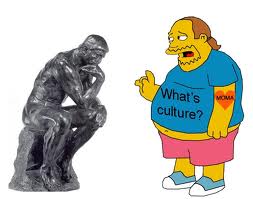
Find the correct defintion of Culture
- Creation and use of technical means
- A 'whole way of life'
- The way that we experience the world ‘second-hand’ through media
- The way that audio/visual activities contribute to the daily lives of most people
Key Terms - Basic Definitions
Find the correct defintion of Media Culture
- Creation and use of technical means
- A 'whole way of life'
- The way that we experience the world ‘second-hand’ through media
- The way that audio/visual activities contribute to the daily lives of most people

Key Terms - Basic Definitions
Find the correct defintion of Technology
- Creation and use of technical means
- A 'whole way of life'
- The way that we experience the world ‘second-hand’ through media
- The way that audio/visual activities contribute to the daily lives of most people

Key Terms - Basic Definitions
Find the correct defintion of Mediation
- Creation and use of technical means
- A 'whole way of life'
- The way that we experience the world ‘second-hand’ through media
- The way that audio/visual activities contribute to the daily lives of most people

Traditional Media
Traditional media developed particularly in the 19th and early 20th centuries.
Here are some examples of traditional media.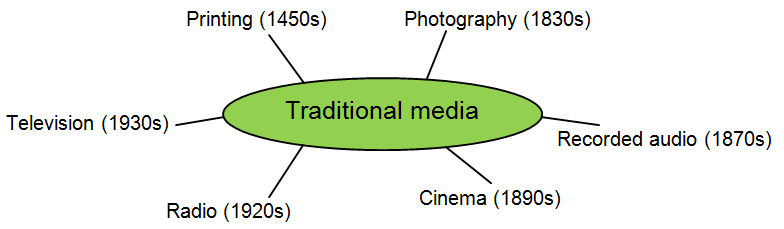
Traditional Media Production Process
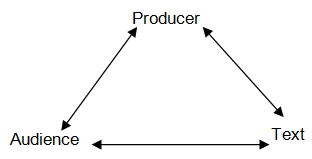
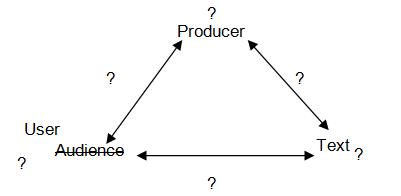
The traditional media production process involves 3 key parts; producer, audience, text.
Mass Media
Traditional media is often known as 'mass media'. A mass medium is an organised technology that allows mass communication to take place.
Mass communication is communication from the few to the many.
- Book
- Newspaper
- Magazine
- Television
- Cinema
- Radio

All of these are examples of mass media.
Can you understand why each of these can be described as mass media?
New Media - Examples
Here are some examples of new media.
New Media - Offers
The term new media has been used since the 1970s by researchers, it's use saw a growth in the 1990s and the term has since changed its meaning.
New media can be thought of as an amalgamation of traditional media with the interactive opportunities offered by computing and communication technologies.
What does new media offer?- On-demand access
- Interactivity
- Participation

All of these are offered by new media.
New media offers the user on-demand access (access anytime, anywhere),
interactivity and participation.
New Media - Tools
New media tools can help you to:
- Connect
- people with information and services
- Collaborate
- with other people
- Create
- new content, services, communities, and channels of communication that help you deliver information and services

New Media - Theory
One idea relating to New Media
Vin Crosbie (2006) says only three media exist:
- Interpersonal Medium
- examples include conversations, letters, telephone call, text messages, emails (one-to-one)
- Mass Medium
- examples include lectures, plays, books, cinema, radio (one-to-many)
- New Medium
- new communications medium – digital, internet, web convergence
- individualized, mass, equalized, reciprocal communication
New Media - Characteristics
McQuail suggests that there are seven characteristics of new media (2005, p.143).
Which of the following feature in McQuail's list?- autonomy
- connectivity
- interactivity
- media richness
- mediation
- personalisation
- playfulness
- privacy
- representation
- social presence (sociability)

- autonomy = feeling in control of content and use, independent from source
- interactivity = two-way communication between user and source
- media richness = involving more senses, being more personal
- personalisation = content and uses are personalised and customisable
- playfulness = entertainment, enjoyment
- privacy = solitary behaviour, individualistic choices and responses and frequently anonymity
- social presence (sociability) = the sense of personal contact with others when using a medium
New Media - Culture
McQuail (2005) suggests that there are 4 main categories of new media.
Here are some examples for each of these categories:- Interpersonal communication media
- examples include emails and mobile phone text messages
- Interactive play media
- examples include videogames and virtual reality environments
- Information search media
- examples include browsing the Internet for information and using the
interactive facilities on your television to find the latest football scores - Collective participatory media
- examples include activities on the Internet such as wikis and group blogs
Social Media - Characteristics
Mayfield suggests five characteristics of social media (2007, p.5).
The 'Social Media Characteristics' bubble below gives Mayfield's five characteristics of social media.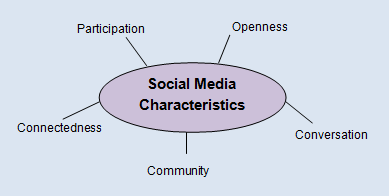
Social Media - Methods for using social media
We use an increasing number of social media in our daily lives.
Which of the following are examples of medthods for using social media?- Blogs
- Chat rooms
- Micro-blogging (e.g. Twitter)
- Online Forums
- Podcasts
- Social networks
- Wikis

All of these are examples for using social media.
Can you think of any more examples?
Social Media - Community and Network
Social media often brings people together. Two ways in which this can happen are through virtual communities and online social networks.

- Virtual community
- a community (group) that communicates or interacts online
- Online social network
- online social structures where people are interconnected using network tools
and software
Online Video - Two methods of collaboration
There are two methods of collaboration in the creation of online video.

- Crowd funding
- people pool their money or resources to support efforts initiated by other people.
- Crowdsourcing
- outsourcing tasks to many people through an open call.
Studentship Task - Week 4 - Task reminder
This week's studentship task is to re-cap some of the topics and ideas that have been covered so far in this module. Once you have worked your way through this task you should write an individual blog entry in your 'personal hub' blog (Blogger or Wordpress) entitled "Week 4 - online learning material"
1. The task
Work through this studentship learning material
2. After completing the task Write an individual blog entry (150-200 words) in your 'personal hub' blog. The blog entry should provide feedback about this week's directed study task. You should include:
- what you feel you have learned following this directed study task
- your response to this task
- what you liked about this task
- what you didn't like about this task
- what could be done to improve it, or make it more interesting or informative?
- whether this task has been useful for your learning for this module